

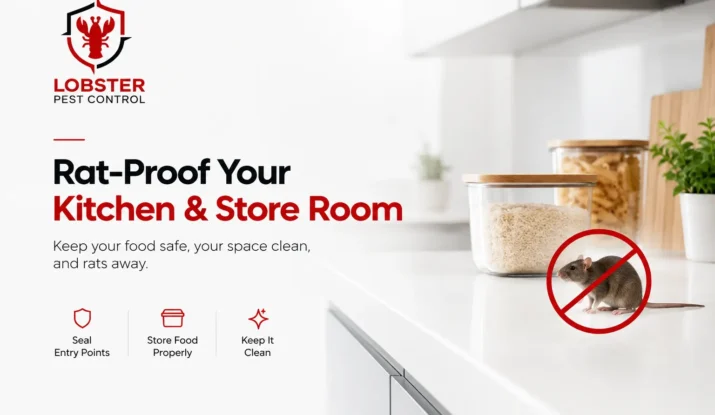
Nobody likes opening a kitchen cabinet and finding chewed packaging or little black droppings. It’s the kind of discovery that makes your stomach drop, and it usually means the rats have been around longer than you think.
The good news is that rat-proofing your kitchen isn’t complicated. Rats come in for three things: food, water, and shelter. Take those away, close the gaps, and they move on to an easier target. Here’s how to do it properly, whether it’s your home kitchen, a restaurant, or a warehouse store room.
Why Are Kitchens and Store Rooms So Attractive to Rats?
Think about it from a rat’s side. Your kitchen has food, warmth, and plenty of dark corners. Your store room has cardboard, sacks of rice, dry goods, and almost nobody disturbing it for days.
In a busy city like Dubai, rodent infestations are common around residential buildings, restaurants, and commercial kitchens, especially where waste bins, drainage lines, and storage areas sit close together. Rats also carry real health risks. According to the CDC, rodents can spread diseases through their urine, droppings, and saliva, and they contaminate food they touch.
So this isn’t only about gnawed boxes. It’s about food safety.
Should You Prevent or Treat? A Quick Check
Proofing works best before rats move in. If you notice chewed packaging, night-time scratching, or a stale musky smell in a closed-up store room, they may already be inside, and sealing alone won’t clear them out. Our guide on rats vs mice and what treatment looks like explains how to tell what you’re dealing with, and our rodent control service covers inspection through follow-up.
If your kitchen and store room are still clean, the steps below are all you need.
Step-by-Step: How to Rat-Proof Your Kitchen
1. Seal Every Gap and Entry Point
A rat can squeeze through a hole about the size of a coin. Walk around your kitchen with a torch and check:
- Gaps around pipes under the sink
- Spaces behind the cooker and dishwasher
- Cracks where walls meet the floor
- Loose or damaged door seals
- Vents and exhaust openings
Use steel wool, cement, or metal mesh to block holes. Rats chew through plastic, foam, and wood, so avoid using them alone.
2. Store Food in Airtight Containers
This is the single biggest change most people can make. Move rice, flour, pulses, pet food, and snacks out of paper bags and into thick, airtight containers made of glass, metal, or hard plastic. Rats can smell open food from surprisingly far away.
3. Keep Surfaces and Floors Clean
Crumbs under the toaster and grease behind the stove are a free buffet. Wipe counters every night, sweep daily, and deep clean behind appliances regularly. Don’t leave dirty dishes sitting overnight.
4. Manage Your Waste Properly
Use bins with tight lids and take rubbish out every day, especially in the evening. Rinse food containers before throwing them away. If you run a restaurant or café, keep the outside waste area clean and away from the kitchen door.
5. Fix Leaks and Remove Water Sources
Rats need water daily. A dripping tap, a leaking pipe, or a wet floor drain can keep them going. Repair leaks quickly and keep drains covered and clear.
How to Rat-Proof Your Store Room
Store rooms are where many infestations quietly grow, because nobody is checking them often.
Lift Everything Off the Floor
Keep boxes and sacks on metal shelving, at least 15 to 20 cm above the ground, and leave a gap between the stock and the wall. This makes it easy to inspect and gives rats fewer places to hide.
Replace Cardboard Where You Can
Cardboard is both a nest and a snack. Where possible, switch to plastic crates or sealed bins, particularly for food items.
Declutter and Rotate Stock
Old boxes, unused furniture, and piles of forgotten items give rats ready-made shelter. Clear out what you don’t need, and follow a first in, first out system so nothing sits untouched for months.
Check Doors, Vents, and Gaps Regularly
Door gaps wider than about 6 mm are enough for young rats and mice. Fit door sweeps or metal kick plates, and cover vents with fine mesh. Do a quick monthly check of the whole room, and use our season-by-season home pest control checklist to time your deeper checks.
Keep Lighting and Airflow Good
Rats prefer dark, undisturbed places. A bright, ventilated, regularly visited store room is much less inviting.
Common Rat-Proofing Mistakes to Avoid
- Using only traps or poison without sealing entry points. New rats will simply replace the old ones.
- Blocking holes with plastic, rubber, or foam, which they chew through.
- Leaving pet food out overnight.
- Ignoring the outside of the building: overgrown plants, open bins, and blocked drains all lead rats to your door.
- Waiting too long. One pair of rats can multiply fast, so early action matters.
For more on prevention, the EPA’s guidance on rodents is a solid reference on sealing, sanitation, and safe control methods.
Why Rodents Are So Common in Dubai Kitchens and Store Rooms
Dubai’s climate, dense buildings, and busy food scene mean rodents are rarely far away. Food businesses also have to meet hygiene standards set by authorities such as Dubai Municipality, so a rodent problem isn’t just unpleasant, it can affect inspections and your reputation.
Rats don’t always travel alone, either. Kitchens with rodent problems often have other pests too, such as cockroaches, flies, and ants, all drawn by the same food and moisture. Dealing with the root cause helps with all of them.
When Should You Call a Professional?
DIY steps work well for prevention and for very early signs. But call in the experts if:
- You hear or see rats during the day (a sign the population is large)
- Droppings keep returning after you clean
- You can’t find where they’re getting in
- You run a restaurant, hotel, warehouse, or food business
- You’ve tried traps and nothing has changed
Lobster Pest Control is a Dubai Municipality approved company that inspects the property, finds the entry points, treats the infestation using safe, eco-friendly methods, and helps you put proofing in place so the problem doesn’t come back. You can check the areas we cover on our service areas page or contact us directly for a free inspection.
Frequently Asked Questions
What is the fastest way to rat-proof a kitchen?
Seal gaps around pipes and doors with steel wool or metal mesh, move all food into airtight containers, and take rubbish out daily. These three steps remove most of what attracts rats.
What is the best material for sealing holes that rats chew?
Steel wool packed tightly into the gap, then covered with cement or metal mesh. Rats gnaw through plastic, foam, and wood, but they can’t chew through metal and hardened cement.
What do rats hate the most?
Rats dislike clean, bright, well-sealed spaces with no food or water available. Strong smells like peppermint may put them off briefly, but they won’t solve an infestation on their own. Proofing and professional treatment work far better.
Is it safe to use rat poison in a kitchen?
It’s risky. Poison can be dangerous for children and pets, and a poisoned rat may die somewhere hidden and cause a bad smell. It’s safer to let a licensed pest control company handle treatment.
How often should I check my store room?
A quick walk-through once a month is a good habit, and a deeper check every quarter. Look for droppings, gnaw marks, and new gaps.
Final Thoughts
A rat-proof kitchen and store room comes down to simple habits: close the gaps, store food properly, keep things clean, and check regularly. Do that consistently and most rats won’t bother settling in.
And if you’ve already got signs of activity, don’t wait. Reach out to Lobster Pest Control on WhatsApp or call +971 58 610 2018 for a free inspection and a lasting solution.